
The Nissan Micra , known in Latin America and in most of Asia as the Nissan March , Nissan Māchi), is a supermini produced by the Japanese manufacturer Nissan since 1982.
The Nissan Micra replaced the Japanese-market Nissan Cherry. It was exclusive to Nissan Japanese dealership network Nissan Cherry Store until 1999 when the “Cherry” network was combined into Nissan Red Stage until 2003.
Until Nissan began selling badge engineered superminis from other Japanese manufacturers, the March was Nissan’s smallest vehicle, and was not renamed and sold at other Japanese Nissan dealership networks.
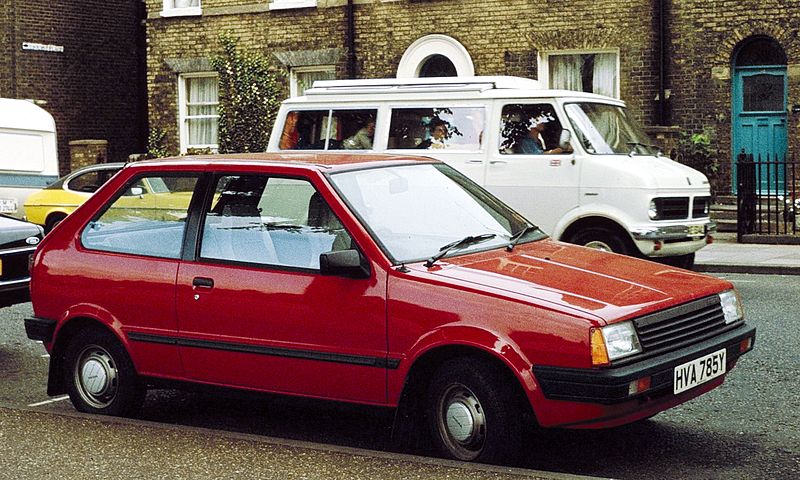
First generation (K10; 1982–1992)
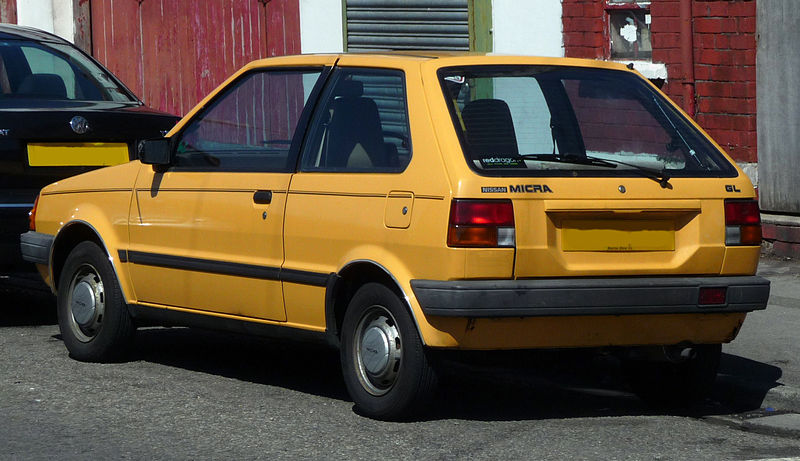
The original Micra (chassis name K10) was introduced onto the Japanese market in October 1982 as a challenger to the Honda City, Daihatsu Charade, Suzuki Cultus, and Toyota Starlet.
It was intended to replace the Nissan Cherry as the company’s competitor in the supermini sector, as the Cherry model sold in Europe had progressively become larger with each successive generation.
In Japan, it was exclusive to Nissan Cherry store locations, as the Japanese market Cherry was renamed March, benefiting from engineering contributions from Nissan’s 1966 acquisition of the Prince Motor Company, who originally developed the outgoing Cherry.
The Micra had particularly low fuel consumption made possible by a specially developed engine only used in the Micra, an uncommonly high gearing, and a particularly low weight: only 630 kg (1,389 lb) in early European trim.
The low weight target necessitated a minimum of insulation, meaning that early Micras were quite loud.
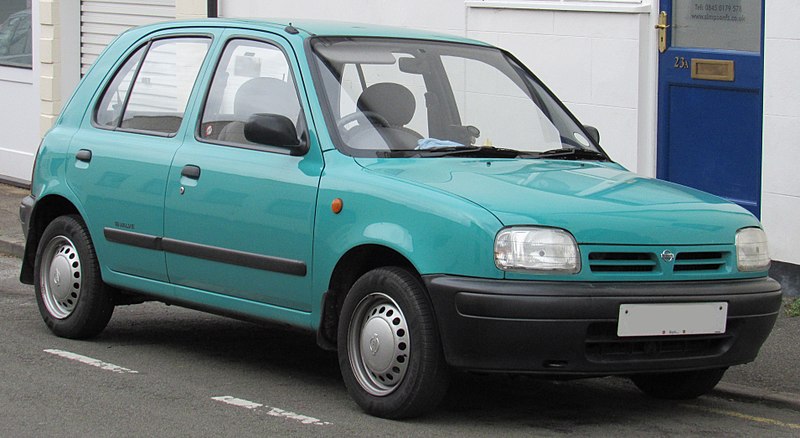
Second generation (K11; 1992–2002)
The second-generation K11 was built in the UK, Japan and Taiwan. It was launched in Japan on January 1992, and released in Europe in the fourth quarter of the year.
It was powered by brand new all-aluminium 1.0 L (CG10DE) and 1.3 L (CG13DE) DOHC 16-valve engines, with 55 PS (40 kW; 54 hp) and 75 PS (55 kW; 74 hp) respectively (higher outputs were claimed in Japan, according to the JIS rather than DIN/ECE rating), both with ECCS (Electronic Concentrated Control System) fuel injection.
It was the second Nissan model line to be produced in the UK at the Nissan Motor Manufacturing UK (NMUK) plant, Washington Tyne and Wear.
A diesel version was offered with the 1.5 L PSA TUD market in Europe as Micra 1.5 D. CVT automatic transmission and Power steering was an option on some models, and the equipment list included safety features not usually available in this market segment: a toughened safety-cage and side-impact door beams were standard and pre-tensioning seat-belts and a driver’s air-bag were optional.
However, the Mk2 Micra scored only a modest two stars in Euro NCAP testing in 1997.[10] Airbags, antilock brakes, electric windows, central locking and air conditioning were as either standard equipment or options on some models in the Micra range.
The European model range consisted of 1.0L and LX, 1.3LX, SLX and Super S. The car soon won the European Car of the Year award for 1993 (the first Japanese car to do so) and the Good Design Award (a Trade and Industry Design award in Japan) along with the Car of the Year Japan award in 1992.
At its introduction in 1993, it won the Automotive Researchers’ and Journalists’ Conference Car of the Year award in Japan. Having won several awards, Nissan manufactured the V3 Award edition.
Third generation (K12; 2002–2010)
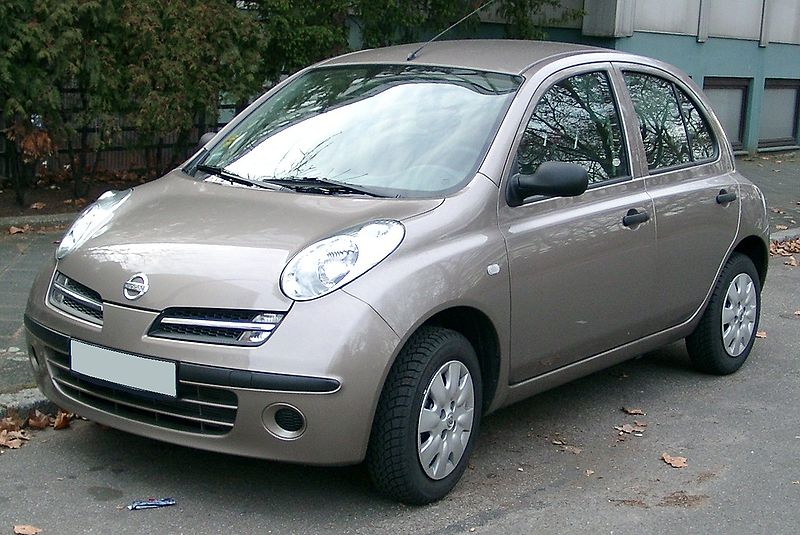
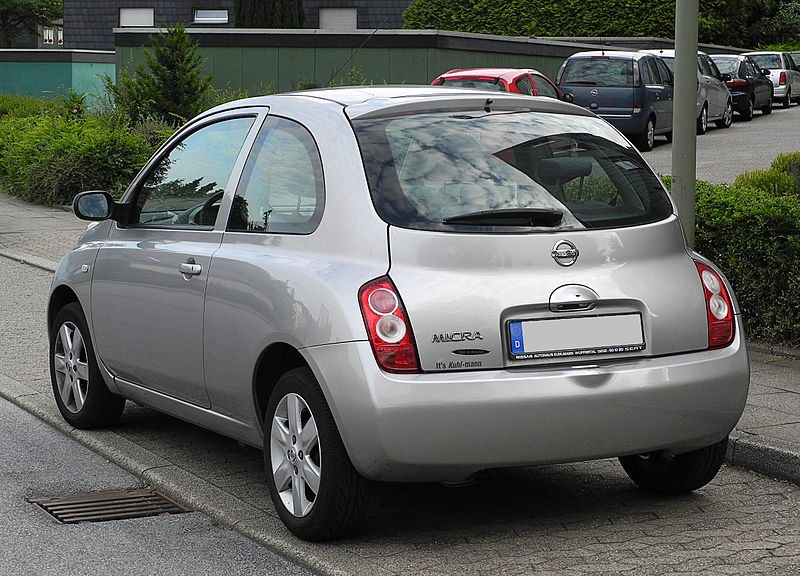
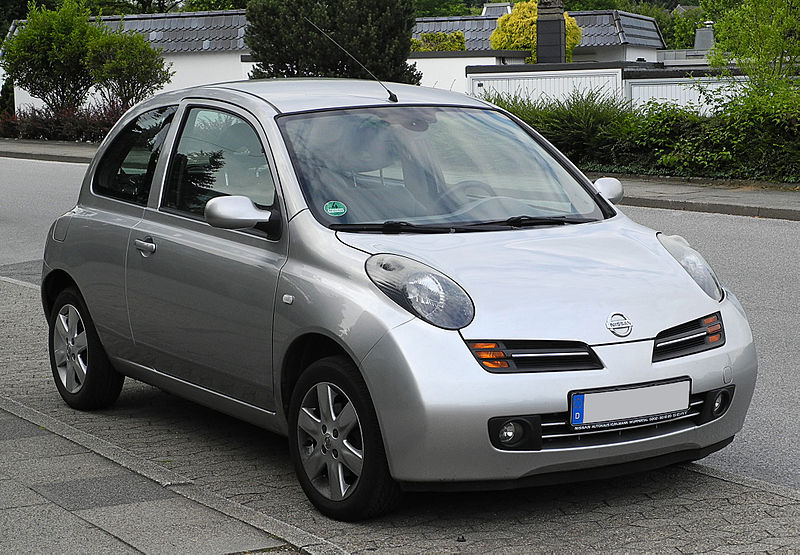
The next version of the Micra, the K12, was unveiled in production form at the 2002 Paris Motor Show,following the lines of the Nissan mm.e concept car presented the year before at the Frankfurt Motor Show.
It was introduced to the Japanese market in February 2002 and to the European market at the end of 2002.,
The car was radically redesigned: it featured a new, 70 mm longer wheelbase (developed with Renault) and an even more curvy exterior that was taller and slightly wider.
Its most distinctive feature was a pair of prominent headlamps that extended to the wing-tops.
The redesign coincided with the Japanese Nissan dealership network Nissan Cherry Store being renamed Nissan Red Stage in 1999.
Other additions included a sliding rear seat and the option of keyless ignition on higher specification models.
The range of engines included improved 1.2 (CR12DE) and 1.4 (CR14DE) petrol models, and a Renault-sourced 1.5 diesel unit (K9K).
The automatic CVT transmission of the previous model was replaced by a conventional automatic transmission
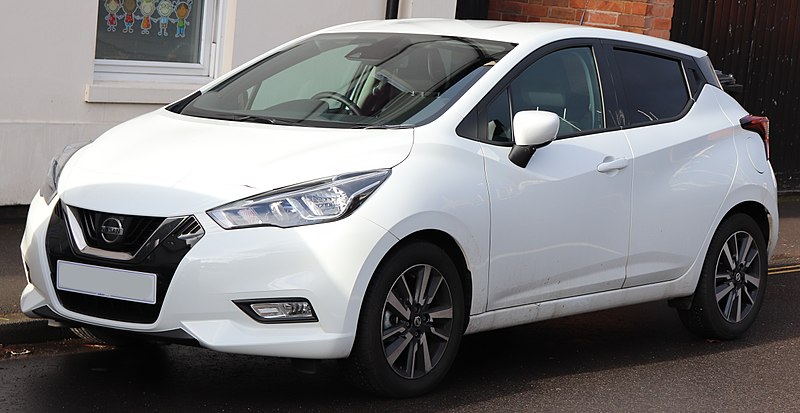
Fourth generation (K13; 2010–2017)
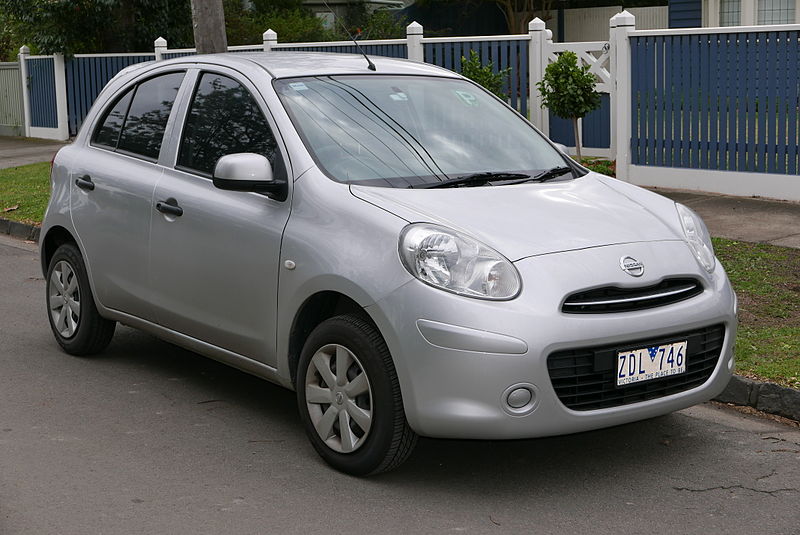
The first sketches of the fourth generation Nissan Micra, first referred to as W02A and later in Nissan press releases as K13, were unveiled on 1 October 2009.[60][61][62]
The Nissan Micra K13 was unveiled at the 80th International Geneva Motor Show.[63][64]
It was sold in more than 160 countries, including Thailand from March 2010, India from July 2010, Europe from November 2010, and Indonesia from December 2010.
It was the first March/Micra to be built in a North American plant, even though this generation did not have any sales in the United States. The K13 was however available in Canada after the spring of 2014.
Nissan March
The Nissan March was unveiled at the 2010 Bangkok International Motor Show, followed by 2010 Beijing International Automobile Exhibition, followed by Nissan Global Headquarter gallery.
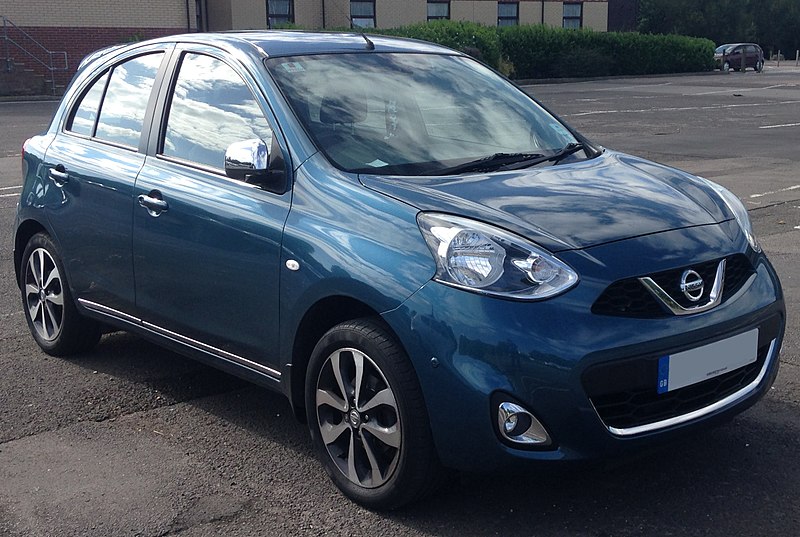
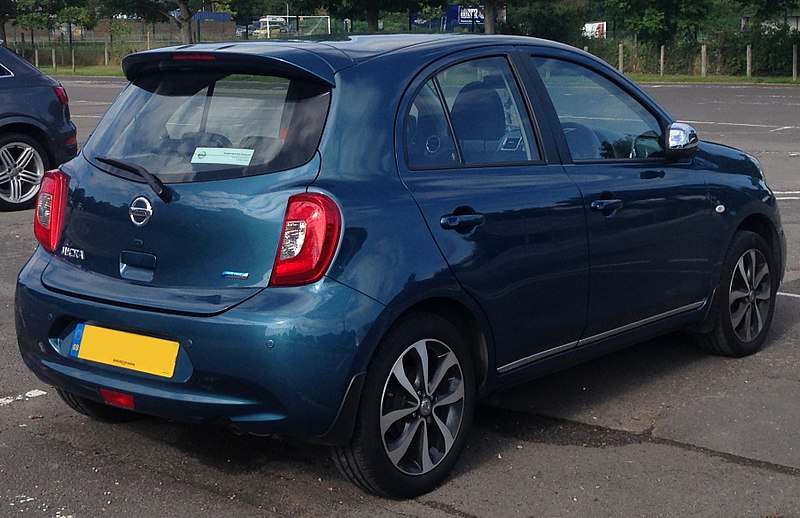
The Japanese model went on sale on 13 July 2010.[72] Early models include 1.2L 3-cylinder HR12DE engine, Xtronic CVT with an auxiliary two-speed transmission, Idling Stop (standard on 12X and 12G)

 MOTOR UNIVERSE