
The Honda Fit also marketed as the Honda Jazz, is a five-door B-segment supermini manufactured and marketed by Honda since 2001 and now in its fourth generation. Marketed worldwide and manufactured at ten plants in eight countries, sales reached almost 5 million by mid-2013.
Sharing Honda’s global small car platform with the City, Airwave, first generation Mobilio and Freed, the Fit is noted for its one-box or monospace design and its re-configurable interior—with a cargo volume competitive to larger vehicles.
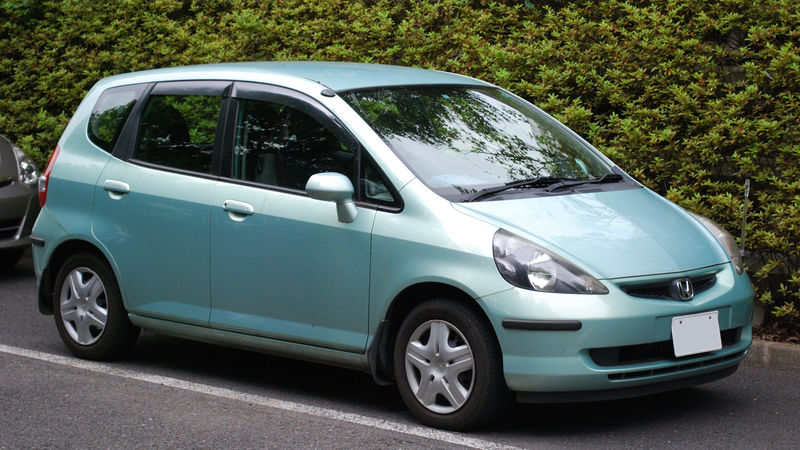
First generation 2001-2008
First generation also marketed as the Honda Jazz, is a five-door B-segment supermini manufactured and marketed by Honda since 2001 and now in its fourth generation.
Marketed worldwide and manufactured at ten plants in eight countries, sales reached almost 5 million by mid-2013.
Sharing Honda’s global small car platform with the City, Airwave, first generation Mobilio and Freed, the Fit is noted for its one-box or monospace design and its re-configurable interior—with a cargo volume competitive to larger vehicles.
Honda released hybrid petroleum-electric versions of the Fit in Japan in October 2010 and in Europe in early 2011.
Honda released the Fit EV, a limited production all-electric version, in the United States in July 2012 and in Japan the following month.
By 2012, Honda Fit was produced in 12 countries, including Japan, Brazil, China, India and Indonesia.
The Fit debuted in June 2001 in Japan, winning the Car of the Year Japan Award.
By December 2001, it had outsold the Toyota Corolla, and ranked first in sales for nine out of twelve months in 2002.
It subsequently was introduced in Europe (early 2002), Australia (late 2002), South America (early 2003), South Africa and South-East Asia (2003), China (September 2004), and Mexico (late 2005).
The Fit’s fuel tank under the front seat and compact rear suspension have enabled the rear seats to fold especially low, creating a flexible and regularised cargo volume that is large for its class.
Second generation (2007–2014)
The second generation Fit/Jazz debuted on October 17, 2007 at the 40th Tokyo Motor Show.
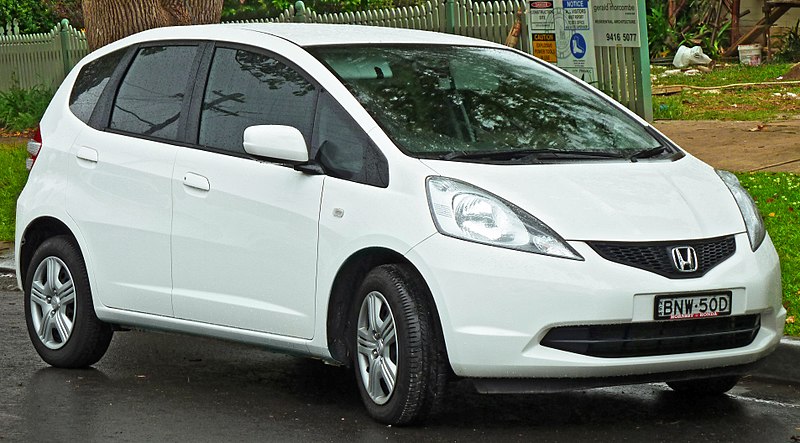
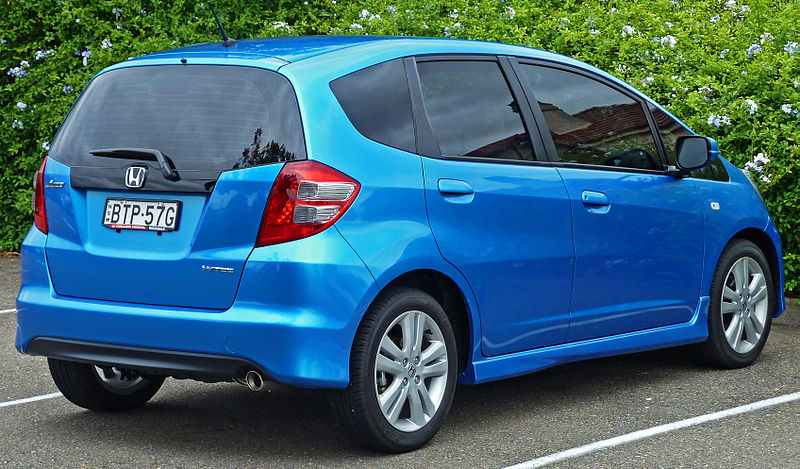
At its introduction in 2007, it won the Car of the Year Japan Award for the second time. The vehicle offered a longer wheelbase than its predecessor and is wider and longer overall.
Overall height is unchanged, while interior height increased by .3 in. Multi-mode seating and cargo configurations were retained (US models were no longer capable of Refresh/Relax Mode until the following gen), with redesigned headrests enabling more convenient folding of the rear seats.
The cabin featured greater interior volume, and boot capacity decreased from 21.3 to 20.6 cubic feet
Two engines were offered in the second generation Fit. A 1.3 L (82 cu in) i-VTEC produces 100 PS (74 kW) at 6,000 rpm and 127 N⋅m (94 lbf⋅ft) at 4,800 rpm.
This engine was offered in both European and Asian markets. A 1.5 L (91 cu in) i-VTEC engine was also offered and produces a maximum output of 120 PS (88 kW) at 6,600 rpm and 145 N⋅m (107 lbf⋅ft) at 4,800 rpm.
This was the only engine available in the American market, in addition to being available in several Asian markets including Japan and Malaysia.
A five-speed manual, five-speed automatic (4WD only) and CVT transmission were available.
The chassis was reengineered, with structural rigidity increased by 164 percent over the first generation Fit.
The Jazz hybrid was launched in Thailand in July 2012,[59] the first hybrid in the country’s sub-compact market.[60] First time buyers of the car were eligible for Thai government’s first car tax rebate.
The hybrid model is assembled in Thailand.New model of Fit Hybrid was launched in Japan in 2013. It is equipped with Honda’s next-generation sport hybrid i-DCD system that combines a 97 kW (130 hp), 156 N·m (115 lb·ft) 1.5-liter direct injection engine combined with a 22 kW (30 hp) 160 N·m (118 lb·ft) Honda H1 motor. Powertrains are shared with Honda Vezel and Honda Grace Hybrid.
Third generation (2013–present)
The third generation Fit/Jazz retains the overall design concept of previous generations, notably the center-located fuel tank and multi-configuration interior concept, marketed as Magic Seating.
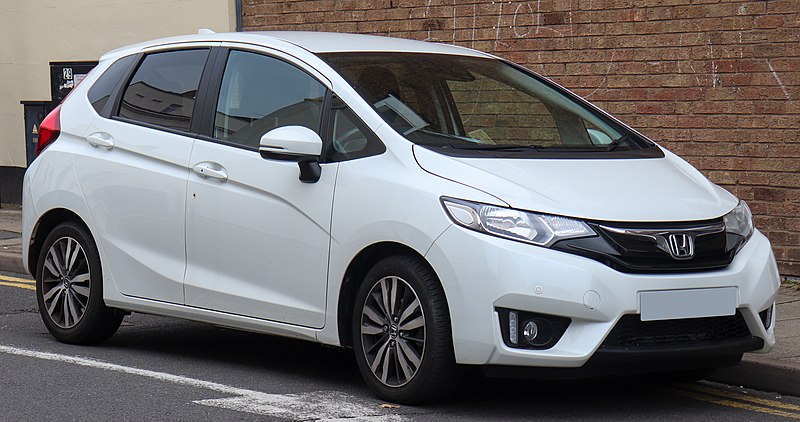
Honda’s all-new “Global Small Car Platform” employing ultra-high strength 780 MPa yield steel for 27% of its bodywork — and a shorter overall length (-1.6 inches), longer wheelbase (+1.2inch) increased rear legroom (+4.8 inches) and increased passenger volume (+4.9 cu ft) compared to its previous generation.[96]
Body panels are both welded and bolted to the frame in a hybrid monocoque and spaceframe fusion — and rear torsion beam suspension is more compact, no longer using an anti-sway bar to maximize interior and cargo space.The HR-V shares its platform with the Fit.
Fourth generation (2020–present)
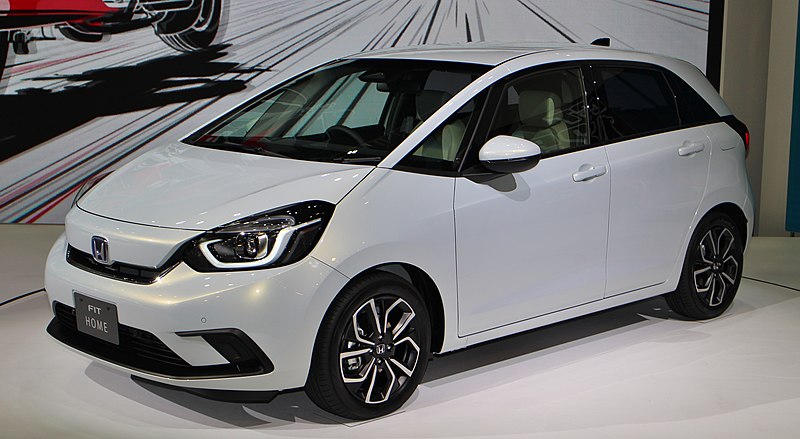
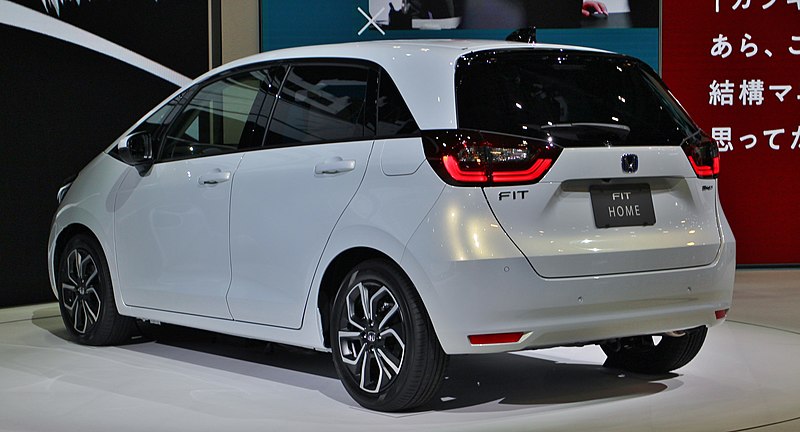
The fourth generation Fit/Jazz was unveiled simultaneously on October 23, 2019 in Japan at the 46th Tokyo Motor Show and Amsterdam, Netherlands at the ‘Electric Vision’ event.[108][109][110] It was launched in Japan on February 13, 2020 and went on sale on the following day. Trim levels for the Japanese market Fit are Basic, Home, Ness, Crosstar and Luxe.

 MOTOR UNIVERSE